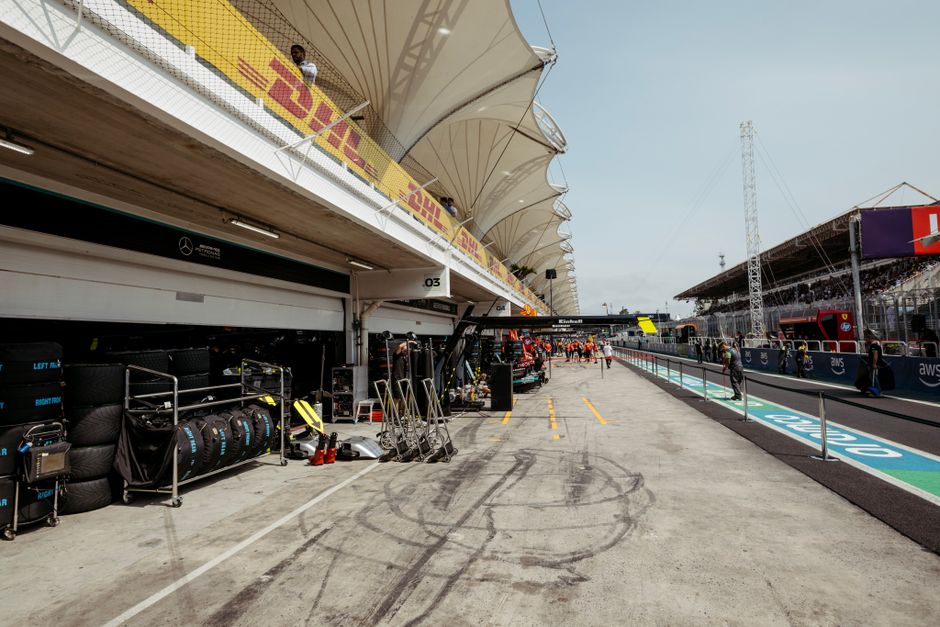
A reliable Zandvoort briefing should follow the weekend in session order and keep each headline attached to the session that produced it. The official 2026 calendar places the Dutch Grand Prix on 21–23 August and marks it as a Sprint weekend, so a Friday report cannot safely be treated as the final word on Sunday.
At 8:12 on Monday morning, Jamie is standing on a crowded platform in Manchester with a coffee in one hand and three Zandvoort alerts in the other. One mentions practice, another reacts to a later session, and the third makes a broad claim about the weekend. The screenshots have lost their timestamps and outlet names.
His office Formula 1 chat is already moving. If Jamie shares the wrong alert, a Friday impression could circulate as Sunday’s result before he reaches his desk. For one uncomfortable minute, he cannot tell which claim belongs where.
Friday establishes the first evidence
Friday begins the timeline. It gives reporters their first session-based evidence from Zandvoort, but every headline still needs two labels: the session that prompted it and the outlet that published it.
That distinction matters on a Sprint weekend because the story can move quickly. A headline drawn from the opening running describes that moment. It does not automatically describe the competitive order later that day, and it certainly does not settle what happens on Sunday.
Suppose an outlet leads on a driver’s early pace. The accurate briefing keeps the wording verbatim, places the outlet’s name beside it, and identifies the relevant Friday session. It avoids upgrading “leads practice” into “favourite for the weekend” unless the named outlet made that claim.
This is where short updates often lose discipline. A striking phrase survives the screenshot, while its source and session disappear. The reader sees a claim without knowing when it was true.
The safer format is simple: session first, exact headline second, named outlet alongside it. That gives the commuter enough context to understand the report without pretending the opening evidence has lasted all weekend.
For a closer example of why conditions and timing matter, read What Can One Damp Practice Tell Us About Antonelli’s Lead at Zandvoort?.
Saturday changes the meaning of Friday
Saturday adds new evidence, and earlier headlines must remain in their original place.
A Friday practice headline can still be accurate on Saturday morning. Its meaning has narrowed, though. It now records what happened in that session rather than offering the freshest account of the weekend.
The briefing should therefore move forward rather than rewrite backward. Friday’s item stays under Friday. Every Saturday headline sits under the session that generated it, with the publishing outlet visible in the same breath as the claim.
This ordering helps readers separate three questions:
- What happened in the session?
- Which outlet reported it?
- Has a later session changed the picture?
Jamie finds the source chip on the first alert just before his train arrives. He can now see that the claim belongs to Friday’s running. A second attributed item belongs later in the weekend. The apparent contradiction disappears because the headlines were describing different moments.
He sends neither screenshot. Instead, he shares the claims with their session labels and outlet names intact. The group can discuss the reporting rather than argue over a timeline assembled from cropped images.
That small choice also limits a familiar problem: one unlabelled report becoming several confident retellings. The Source Chip a “Qualified” Screenshot Didn't Have, and What It Could Distort explores the same risk from another angle.
Sunday supplies the finishing context
Sunday is where the chronology lands. The final session produces the weekend’s finishing context, while Friday and Saturday remain part of the record.
A clean briefing does not blend the three days into one paragraph. It leads with the latest confirmed outcome, names the outlet carrying each headline, then preserves the earlier items beneath clear day and session labels. Readers can see how the story changed without mistaking an early report for the finish.
This matters most when the wording is close enough to sound interchangeable. “Fastest in practice,” “ahead after a Saturday session,” and “finishes ahead on Sunday” describe separate achievements. Removing the session turns precise language into a misleading general claim.
The same rule applies when an outlet focuses on an incident, a team response, or a driver comment. Keep the headline verbatim. Keep the publisher attached. Place it at the point in the weekend when it appeared. Do not add a conclusion the outlet did not report.
Build the briefing before sharing the claim
Start with the date and weekend format supplied by the official calendar. Then create a Friday-to-Sunday timeline and place each headline only after confirming its session and outlet.
If either label is missing, pause. A claim without a source chip cannot meet the same standard as an attributed report, and a headline without a session can distort the sequence even when every word is genuine.
By the time Jamie reaches the office, his message contains three short entries in chronological order. Each has a session label. Each keeps the outlet beside the claim. Nobody in the group has to guess whether Friday’s first impression survived until Sunday.
Comments
No comments yet.