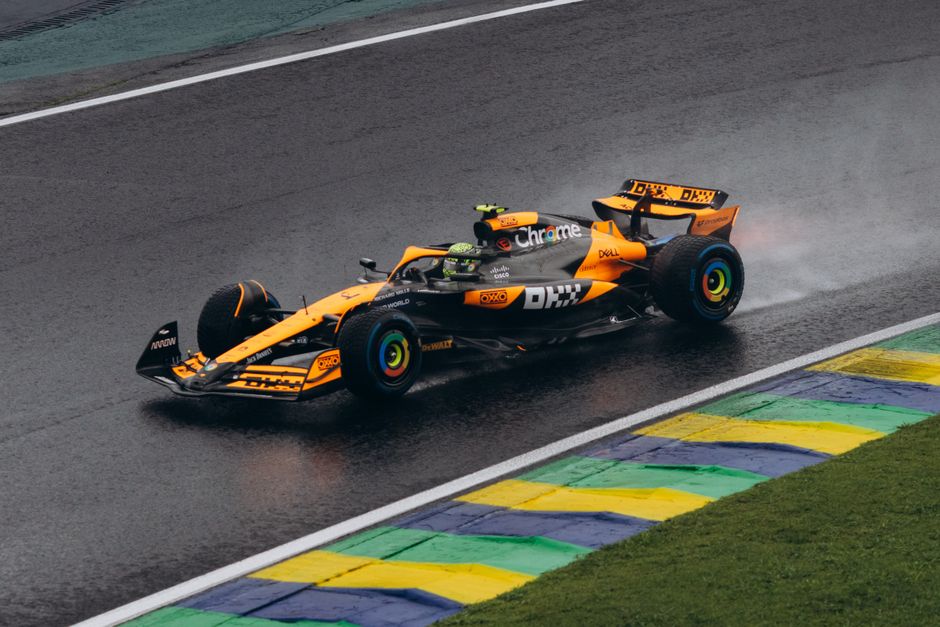
George Russell secured Dutch Grand Prix Sprint pole by 0.041 seconds over Lando Norris, Formula 1 reports. Charles Leclerc finished third, but the result turns on the tiny gap between the two British drivers at the front.
Before the timing screen settled, 0.041 seconds held the outcome in doubt. That margin is shorter than a blink. It separates first from second, Russell from Norris, and a pole-winning lap from one that was almost identical.
Formula 1 has seen this shape of contest before. At Monza in 1971, Peter Gethin approached the finish of the Italian Grand Prix with Ronnie Peterson and three other drivers still in contention. Nobody in that leading group had built enough distance to make the result comfortable.
Gethin crossed the line first. Peterson followed 0.01 seconds later.
Monza showed what a narrow margin really means
The official Formula 1 account records the 1971 Italian Grand Prix as the closest finish in the championship’s history. Gethin won at Monza by one hundredth of a second, with François Cevert, Mike Hailwood and Howden Ganley completing a tightly packed top five.
That result gives 0.041 seconds some useful scale. Russell’s Sprint pole margin is four times larger than Gethin’s winning advantage, yet both gaps belong to the same unforgiving part of motorsport: the point where spectators cannot reliably call the result with their eyes.
The stopwatch has to finish the argument.
There is another detail that keeps the Monza comparison honest. Gethin’s margin decided a race victory after the cars reached the chequered flag. Russell’s margin decided Sprint pole. Those are different results with different consequences. The connection lies in the mechanism, not the size of the prize. In each case, timing converted an almost indistinguishable contest into a clear order.
Russell gets the result, Norris stays within reach
The lead fact belongs beside its source: Formula 1 reports Russell first, Norris second by 0.041 seconds, and Leclerc third.
That wording matters. A cropped timing image can show the positions, but it may lose the session, the outlet and the distinction between a reported result and somebody’s interpretation of it. “Russell beats Norris” also leaves too much unsaid. Beats him where? In qualifying, a Sprint session or the Grand Prix itself?
Here, the precise claim is narrow and checkable. Russell secures Dutch Grand Prix Sprint pole. Norris misses it by 0.041 seconds. Leclerc takes third. Formula 1 carries the result.
Sports News keeps that outlet name attached through its source chip because attribution should survive the journey from the original report to a vertical video or short roundup. The same discipline matters in football, especially when a transfer update travels through screenshots and group chats. The final sector Russell’s timing screen didn’t have, and what it risked examines what disappears when one part of the evidence is missing.
Precision stops a close result becoming a loose claim
A margin this small invites exaggeration. Russell did not dominate Norris. Norris did not finish “nowhere.” The recorded difference supports one clean statement: Russell takes Sprint pole by 0.041 seconds.
That restraint makes the result stronger. Readers get the session, the order, the margin and the reporting outlet without commentary pretending the gap says more than it does.
It also protects the next retelling. One person sees a clip on the commute. Another catches a screenshot before team news. A third repeats the result in a group chat. If the source and session remain visible, the claim stays intact. If they vanish, “Sprint pole” can shrink to “pole” and then drift into an incorrect claim about the Grand Prix grid.
The same problem appears when football reporting loses its outlet name. A reported discussion becomes an agreement; an agreement becomes a completed transfer. What happens when a transfer update loses its source? follows that chain in the setting where supporters encounter it most often.
Read the margin with the source still attached
The practical move is simple: check the session label before sharing the order. Then keep the outlet visible beside the claim. Those two details take seconds to confirm and prevent most of the distortion that follows a cropped result.
Use the margin to describe the contest, not the driver’s entire weekend. Russell owns the Sprint pole result. Norris is 0.041 seconds behind in that session. Leclerc holds third. Anything broader needs its own evidence.
Monza’s 1971 finish survives as a landmark because the official timing preserves exactly how little separated Gethin and Peterson. Russell’s margin deserves the same basic treatment, even with smaller stakes: record the number, name the session, and keep Formula 1 beside the result.
Comments
No comments yet.