What changed
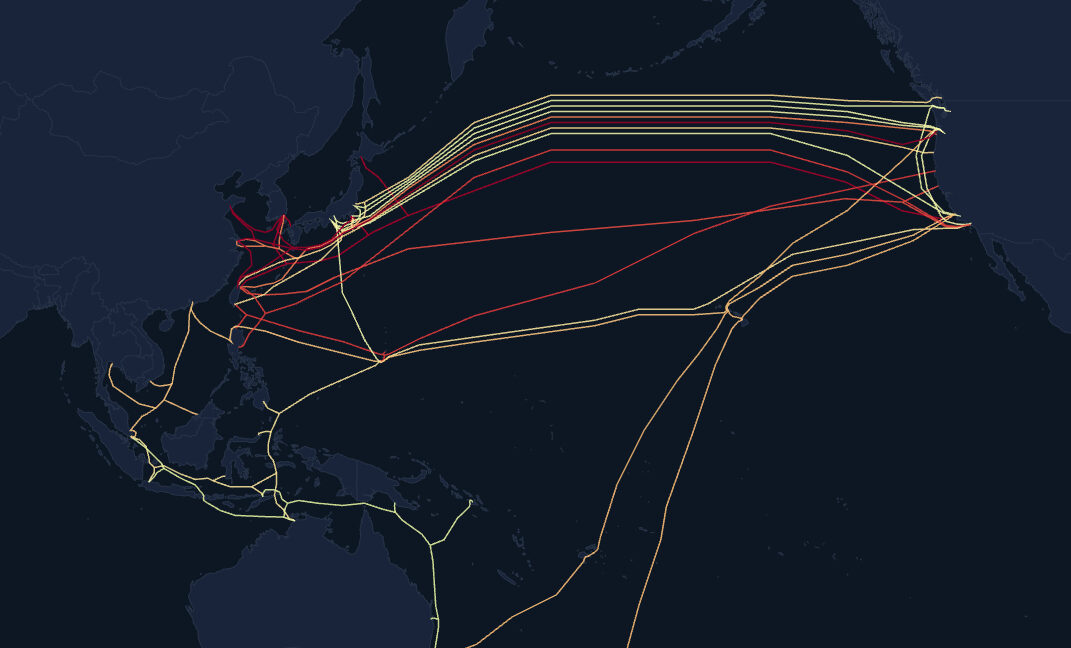
A September 2026 report from the US-China Economic and Security Review Commission identifies three Pacific cable projects tied to Google, Meta and Verizon among the five highest-risk routes in a new vulnerability index.
The TPU, ORCA and E2A cables face the greatest exposure around waters near Taiwan, Japan and the Philippines, where shallow seabeds and busy shipping lanes overlap with China’s maritime claims.
Why it matters
These cables are the plumbing behind direct digital links between the United States and East Asia. A serious disruption to even one could push data onto slower, less direct routes and overwhelm the capacity still available.
That makes the risk practical, not merely geopolitical. A cable project can be backed by the biggest technology companies in the world and still depend on a narrow stretch of seabed crowded with ships.
The index weighs cable depth, shipping traffic, ownership, Chinese territorial claims and connections to Taiwan. It also reflects a worrying shift in attention: most cable damage comes from fishing gear, anchors, storms and landslides, but rising tensions have made suspicious cuts harder to dismiss as ordinary accidents.
The report does not establish that China has sabotaged any of these cables. It does show why routes near Taiwan, Japan and the Philippines would be the first places to prioritize for underwater sensors or patrols if governments decide to harden the network.
Comments
No comments yet.