What changed
Researchers have developed FLIP, software that tunes a physical model of the James Webb Space Telescope’s NIRCam to reduce noise in exoplanet images. It uses GPU-optimized gradient descent to adjust about 1 million telescope-model parameters from observations of an actual star, then fine-tunes the result on the scientific image being analyzed.
Why it matters
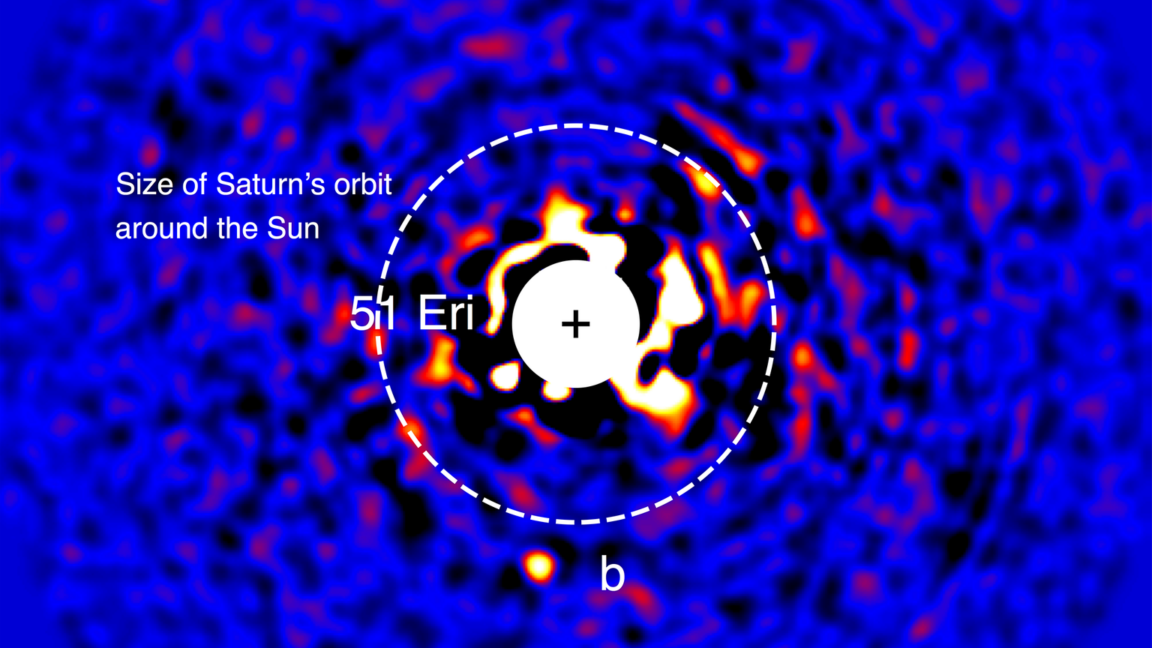
A coronagraph can block much of a star’s light, but it cannot remove noise caused by tiny changes in the telescope’s configuration and pointing. That leaves faint planets buried in the glare.
FLIP attacks the problem at the modeling stage. Instead of relying only on reference-star observations, it models how the telescope hardware behaves and calculates a cleaner point-spread function: the way a point of light becomes blurred in the image.
The practical appeal is speed. On a current GPU, the initial optimization takes slightly more than half an hour. That could give exoplanet researchers a workable processing step before interpreting individual images, with lower modeled instrumental noise making faint planetary signals easier to distinguish from starlight.
The important caveat is that the result is not yet a measured leap in planet detection. The available account does not establish how much FLIP improves performance across different targets or wavelengths, or whether the software is publicly available and validated beyond the described analysis.
Comments
No comments yet.