What changed
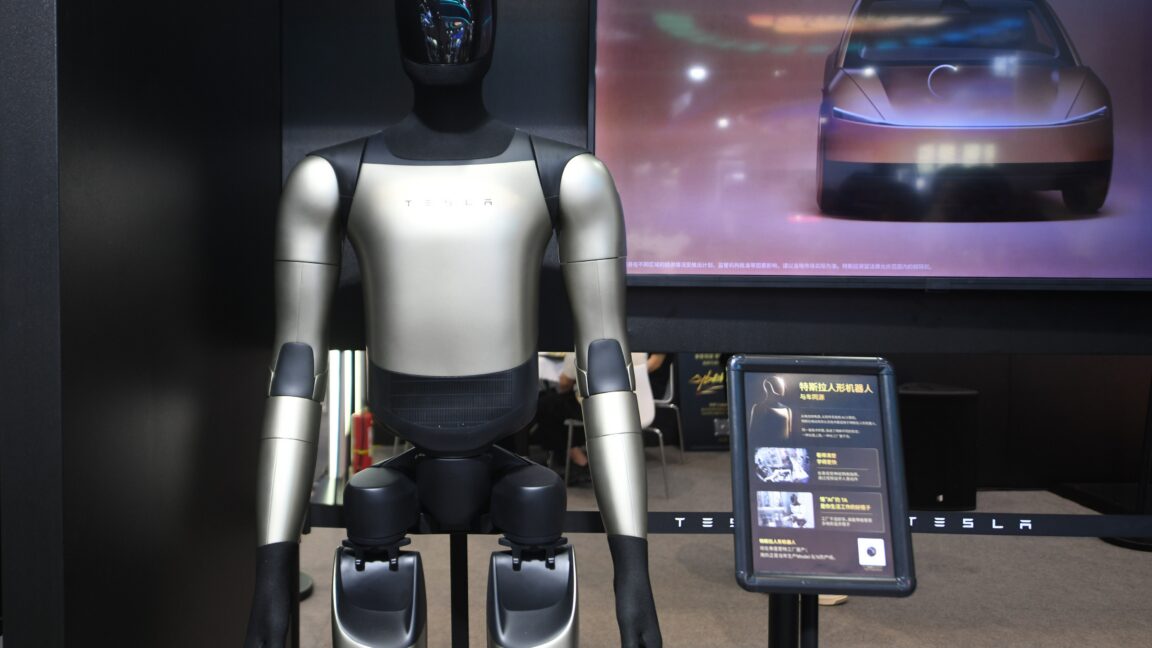
Tesla has halted production of the Model S sedan and Model X SUV at its Fremont factory in California to dedicate the lines and staff to assembling the Optimus V3 humanoid robot. The company is currently producing hundreds of Optimus units per week and is targeting a rate of 1,000 robots per week by the end of 2026, a goal CEO Elon Musk has framed as potentially "the biggest product ever." The push is complicated by a manufacturing process that requires human workers to manually assemble more than 100 small components per robot hand and forearm, a task many employees are reportedly resisting.
Why it matters
The operational reality of scaling general-purpose robotics is colliding with the economic logic of the automotive industry. Tesla is betting its future on AI and robotics, but the path to mass production is currently blocked by the limits of precision manufacturing and the reluctance of the very workforce it intends to replace. The specific friction is hardware: robotic hands are complex, and the touch sensors required for delicate manipulation are so unreliable that Tesla has developed a replaceable, glove-like layer of sensors to avoid discarding entire hands.
This creates a direct cost and capacity problem. The Fremont facility, once the heart of Tesla's premium car production, is now a training ground and assembly plant for robots that still require specific programming to function in controlled environments. The company relies on factory workers in Texas and California wearing special suits to generate the visual data needed for imitation learning. If the manual assembly of micro-components remains the bottleneck, the 1,000-per-week target becomes a question of labor availability and morale rather than just software maturity. The most likely outcome in the coming months is that Tesla reaches its production target but at a significantly higher unit cost, as it scales up human labor to compensate for the lack of automated precision in hand assembly.
What to watch next
The critical near-term signal will be any announcement regarding automated production lines for the robot's micro-components. If Tesla continues to rely on manual assembly as the primary method, it faces a hard ceiling on both cost and scale. Simultaneously, labor relations around the data-collection suits will be a key indicator; if the resistance to training robot replacements escalates into safety complaints or union action, the data generation pipeline that drives the Optimus AI could face unexpected disruptions.
Comments
No comments yet.