
Locally built surveillance systems can carry critical factory security handovers when they are designed for the site, maintained nearby and tested under real operating conditions. The strongest procurement case rests on response time, repair access and clear evidence of what the system can detect, record and escalate.
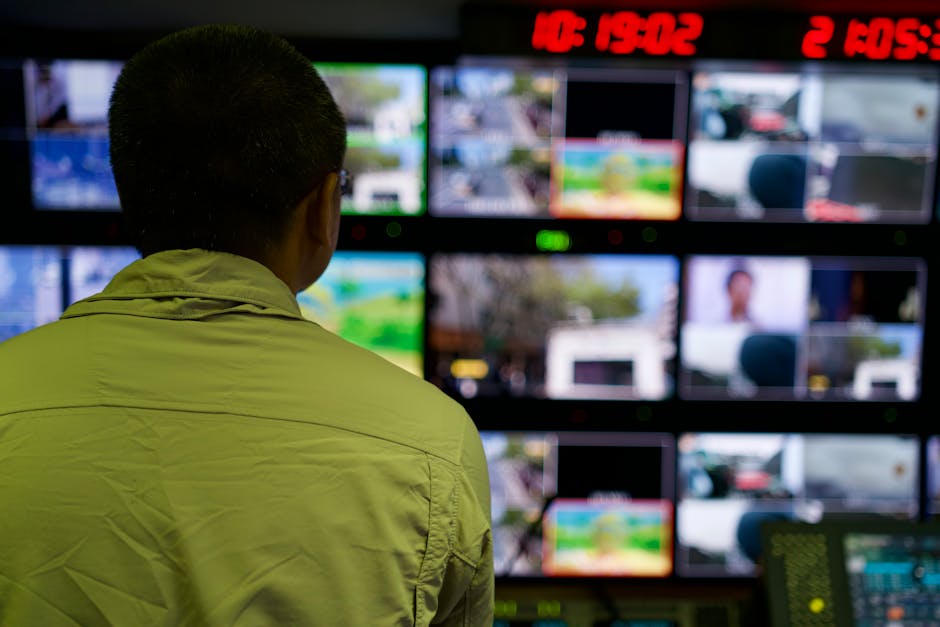
At 6:10 a.m., Chinedu, a composite factory operator outside Lagos, stood beside the control-room desk holding a paper cup of tea that had already gone cold. The night supervisor had spotted movement near a restricted storage area, and the incoming guard team needed usable camera coverage before taking over.
One feed showed an empty access road. Another had stopped updating. If the remaining cameras failed, the morning shift would inherit a blind section around valuable equipment while an unidentified person might still be nearby. Production managers faced an ugly choice: pause access to the area or send guards toward a threat they could not locate.
The handover exposed the real buying requirement
The surveillance system had been assembled locally rather than imported as a complete package. That detail mattered less than what happened next.
Chinedu called the technician whose team had configured the site. Instead of beginning with a product serial number or waiting for an overseas support queue, they worked from the factory layout and the last known camera position. The technician guided him through isolating the frozen feed, checking whether the fault affected recording, and moving coverage from a nearby camera toward the exposed approach.
The system did not identify the person or make the danger disappear. It gave the security team enough visibility to keep the restricted area closed, review the recorded sequence and direct guards without walking them blindly into it. That distinction is important. Surveillance supports a response; it does not replace one.
By the end of the handover, Chinedu’s tea was untouched, but the next shift had a specific camera view, a known blind spot and an agreed escalation path. The threat had become manageable because the system’s limits were visible and local help understood the site.
Imported hardware is a weak proxy for reliability
Technology buyers often treat country of origin as shorthand for quality. It is an easy filter, but a poor substitute for evidence.
A well-built imported camera may offer excellent image quality and still become a liability if replacement parts are slow to obtain, configuration knowledge sits abroad or the installer cannot diagnose a fault at shift change. A locally manufactured or integrated system may reduce those risks, provided the supplier can prove durability, security and support capacity.
The useful comparison starts with failure conditions:
- Can the site keep recording when one component loses connectivity?
- Who can diagnose a fault before the next shift arrives?
- Are replacement parts available within the operating region?
- Does the buyer control access permissions and retention settings?
- Can operators tell the difference between a live view, a delayed feed and missing footage?
- Has the system been tested against dust, heat, unstable power and the site’s actual network conditions?
These questions expose more than a brochure’s resolution figures. They reveal what happens at 6:10 a.m., when a guard needs an answer and the procurement team is asleep.
Local manufacturing still needs hard scrutiny
Terra Industries, a Nigerian defense technology company, has raised $52 million in seed funding to expand automated surveillance systems and its regional manufacturing base. The funding signals investor interest in African security technology and production capacity. It does not, by itself, prove that any individual deployment is accurate, secure or dependable.
Buyers should separate three layers of evidence. Reported facts include funding, manufacturing plans and stated product capabilities. Analysis asks whether regional production could shorten repairs, improve site adaptation or reduce dependence on imported components. Hands-on findings require direct testing: recorded footage, alert behaviour, access controls, outage recovery and operator workload.
That separation matters whenever automation enters the sales pitch. A system that flags unusual movement may help a small security team examine more feeds. It may also produce false alerts, miss activity or encourage operators to trust a label they have not verified. Ask suppliers to demonstrate the detection boundary, including examples the system gets wrong.
The same identity and control questions appear in other automated products. Our analysis of OpenClaw reports examines why knowing who or what performed an action matters as much as the action itself.
Test the handover before approving the purchase
A useful factory trial should recreate the shift change, not stage a polished daytime demonstration. Disable a camera. Interrupt connectivity. Ask an operator who did not configure the system to find the last reliable recording. Then call support and measure whether the technician understands the site without a long explanation.
Document what the trial reveals: blind spots, recovery steps, access roles, repair ownership and the point at which security staff must stop relying on the system. Keep those findings beside the commercial proposal.
Chinedu’s morning ended with a marked camera map on the desk and the incoming supervisor repeating the escalation plan back to him. That is the standard worth buying: when a threat arrives before the next shift, the people taking over know what the system can see, where it has failed and exactly what to do next.
Comments
No comments yet.