
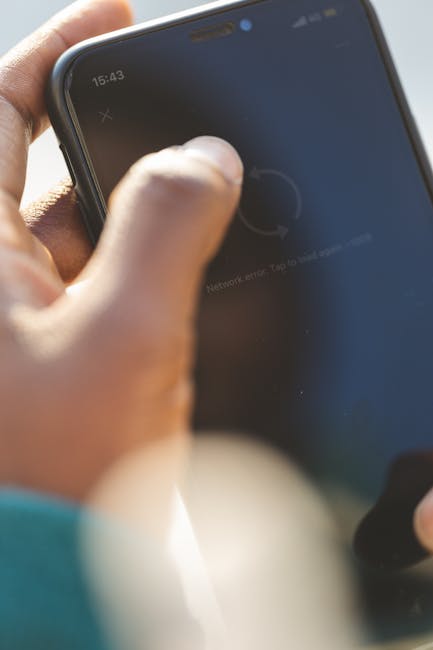
A release candidate that passes every emulator check can still fail on the phone customers carry. Physical-device testing catches hardware, network, permission, thermal and lifecycle behavior that software simulation can miss.
In July 2010, Steve Jobs stood at Apple’s campus in Cupertino to address a problem that had escaped the iPhone 4 launch process. Customers had found that holding the phone around its lower-left edge could reduce reception. Consumer Reports reproduced the problem in controlled testing and withheld its recommendation.
The software worked. The handset shipped. A human hand exposed the failure.
The gap between green tests and a working product
Picture the familiar Friday afternoon sequence. The release candidate installs cleanly in the emulator. Login works. The payment screen loads. Notifications appear when triggered. The team closes the remaining tickets and prepares the store build.
Then someone installs it on the physical phone sitting beside the keyboard.
The first launch hangs after the permission prompt. A second attempt reaches the home screen, but the camera view is black. Switching to another app and returning loses the draft. On a weaker mobile connection, an API request times out without giving the user a useful recovery path.
Those examples are common failure classes, not details from Apple’s iPhone 4 incident. The connection lies in the testing gap. A model can represent a device without reproducing every interaction among hardware, operating-system state, network conditions and the person holding it.
Emulators remain valuable. They are fast, reproducible and cheap to run in parallel. They let a small mobile team check screen sizes, operating-system versions and routine flows before every commit reaches a handset.
Their green status proves that the build passed those simulated conditions. It says less about what happens after a phone has been running all day, storage is tight, the network changes mid-request or the operating system suspends the app.
Real phones introduce real constraints
A physical handset adds variables that are easy to flatten in a development environment.
Memory pressure can terminate background work. Thermal limits can slow sustained processing. Cameras, microphones, Bluetooth radios and biometric sensors bring hardware-specific behavior. Permission state becomes messy after upgrades, reinstalls and previous denials. Push notifications depend on services beyond the process running on a laptop.
Users also interrupt apps. They lock the screen during checkout, answer a call while recording audio, rotate the phone halfway through a form and return several hours later. A release candidate needs to survive those transitions without silently discarding work or trapping the user.
This is why the last physical-device pass should focus on risk, rather than repeating every emulator test by hand. Test the flows that depend on hardware. Test the actions tied to money, identity or irreversible data. Test interruption and recovery. Test on the oldest supported handset available to the team, plus at least one current device.
The current push toward remote device access reflects the same constraint. Google Cloud has launched a public preview of a managed platform offering on-demand physical devices and emulators through streaming and parallel-testing APIs. Remote access can widen coverage when a team cannot keep a cabinet of handsets. It does not remove the need to decide which failures would block release.
A Friday checklist needs release authority
The costly part of a late failure often comes after discovery. The build has already been described as done. Marketing is waiting. Store metadata may be prepared. A founder sees the defect and has to choose between delaying the release and hoping customers never hit it.
That decision gets easier when the team defines blocking failures before Friday.
A failed payment, broken login or lost user draft should usually stop the build. A minor spacing error may wait. Camera, location, microphone and Bluetooth features need tests on the hardware they call. Recovery paths deserve the same attention as successful paths because mobile networks and app sessions end unpredictably.
Assign one person authority to stop the release. Record the phone model, operating-system version and exact steps used for each physical-device check. Keep the evidence attached to the release candidate, so a green result refers to a specific build rather than a memory of something that worked earlier in the week.
For small teams, a compact matrix is enough: critical journey, device class, operating-system version, connection condition, interruption and result. The goal is traceability. When a defect appears, the team should know what was tested and what remained outside the sample.
Ship after the handset earns the green light
Apple responded to the iPhone 4 reception dispute with a press conference and a free-case program. The company had the resources to investigate publicly, support customers and absorb the attention. A young mobile company may get a one-star review, a refund request and a deleted app before it understands the pattern.
That is the practical bridge from Cupertino to a founder’s Friday build. Software meets customers through physical objects under imperfect conditions. The final release decision should include evidence from one of those objects.
Before uploading the next candidate, put it on a real supported phone. Start from a clean install, deny and restore permissions, change the connection, background the app during its most important task, restart the device and try again. If a critical flow breaks, the build is still a candidate.
Comments
No comments yet.