What changed
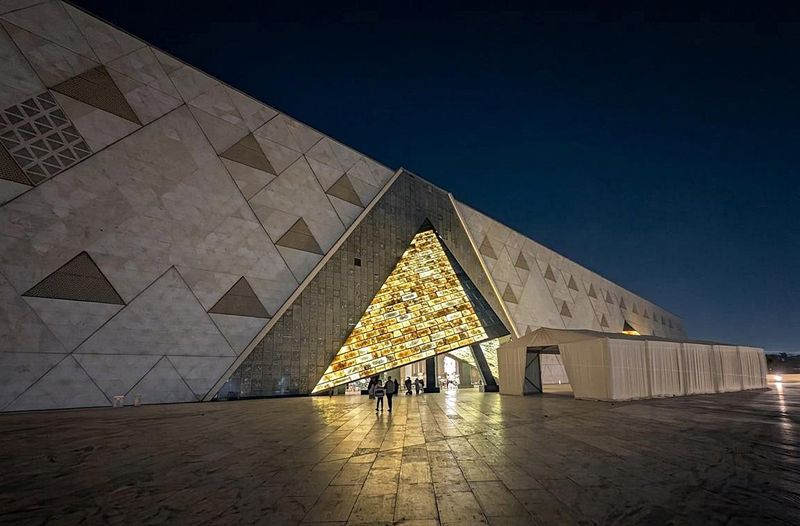
The Grand Egyptian Museum in Cairo has brought together the artefacts found in Tutankhamun’s tomb, discovered in 1922, in dedicated galleries with modern climate control and security. The museum, designed by Heneghan Peng after a 2002 global competition, opened less than a year ago and includes 12 galleries tracing 3,000 years of pharaonic rule.
Why it matters
The museum makes Tutankhamun’s legacy harder to reduce to a famous mask or a schoolbook mystery. Visitors move from a vast plaza and a 3,200-year-old statue of Ramses II to galleries filled with objects from Egypt’s past, before reaching the reunited treasures of a single young king.
That setting matters because the story of ancient Egypt is also a story about how Africa’s achievements are seen, labelled and sometimes quietly removed from Africa’s history. The grandeur is not only in the gold and ritual vessels. It is in the engineering, architecture and artistic discipline required to create and preserve them across thousands of years.
The museum’s scale sharpens that point. It is presented as the world’s largest museum devoted to one civilisation, built beside the pyramids and intended as a contemporary architectural counterpart to them. Its marble, glass, alabaster and hieroglyphs do more than house old objects. They place African history in a building designed to command the present.
The most useful shift is simple: Tutankhamun’s treasures are not merely spectacular relics. They are evidence of a complex African civilisation whose artistic achievements do not need borrowed validation.
Comments
No comments yet.