What changed
Based on NBC News World’s reporting, a U.S. official said the United States struck multiple Iranian tankers Tuesday after further attempted missile attacks on a Navy warship; the number of tankers was not specified. Iran’s Revolutionary Guard Navy then warned crews on tankers near Kuwait and Bahrain to leave their vessels, while the Trump administration sanctioned more than two dozen commercial and private airlines and foreign cargo providers tied to Iran’s aviation industry. Brent crude briefly reached $99.46.
Why This Matters
This is no longer simply a fight over ships. It is a fight over whether oil can move through a narrow stretch of water without crews, port operators and buyers deciding the risk is too high.
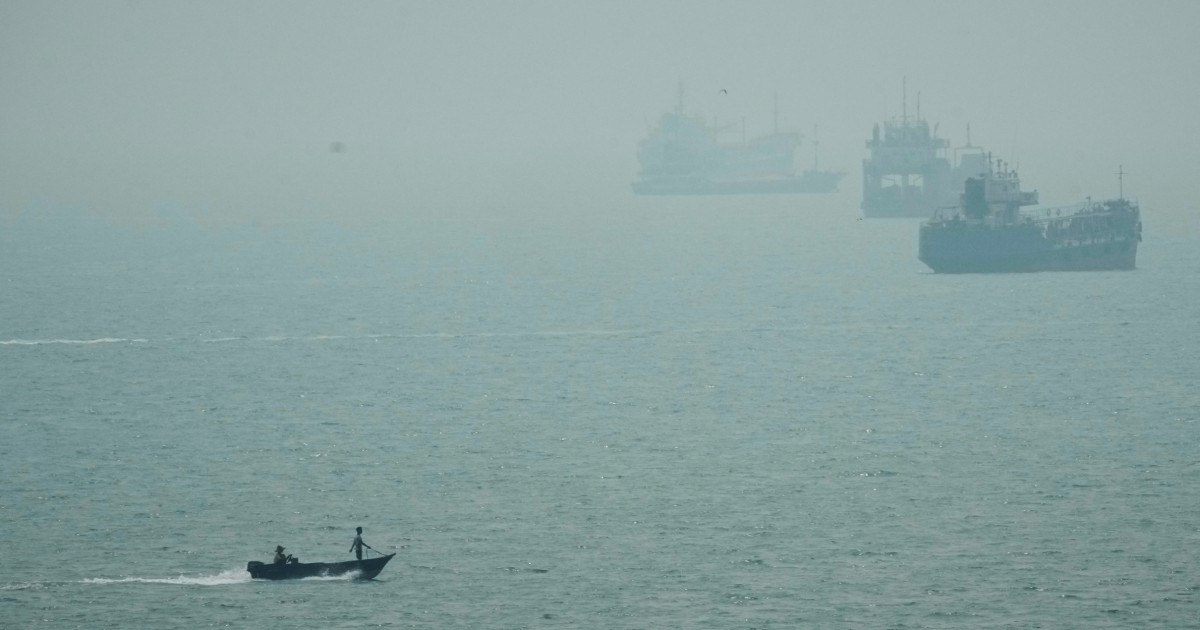
About one-fifth of global oil passed through the Strait of Hormuz before the war, according to the report. A tanker does not need to be sunk to disrupt that flow. If operators delay port calls, alter routes or keep crews away from exposed berths near Kuwait and Bahrain, fewer cargoes may move on time. That can make oil harder and costlier to procure well beyond the Gulf.
The United States is helping only a limited number of vessels use a route off Oman, while Iran wants ships to follow a route it chooses. That leaves commercial operators facing an unusually blunt calculation: accept a constrained passage, wait, or find another arrangement. None is frictionless.
Our outlook (informed speculation): over coming weeks, some assisted transit is likely to continue while caution near Kuwait and Bahrain keeps the price of shipping risk elevated. That outlook weakens if safe transit expands quickly or Iran’s warning produces no operational disruption.
The historical parallel
The closest earlier episode was the 1987–88 Iran-Iraq “Tanker War.” AP’s historical account describes U.S. escorts for reflagged Kuwaiti tankers and Operation Praying Mantis after an Iranian mine damaged the USS Samuel B. Roberts.
The structural resemblance is clear: U.S.-Iran maritime escalation, commercial oil shipping and a chokepoint under pressure. The important difference is that the earlier mission focused on escorts, while the current report describes a blockade, strikes on Iranian tankers and a broader war; drones and more capable missiles also change the exposure.
As AP later reported, Operation Earnest Will escorted roughly 70 convoys, yet mines and asymmetric attacks still caused serious losses. The useful lesson is that naval support can preserve some movement without making the route feel safe. Watch whether today’s limited U.S.-assisted route grows into usable capacity or remains a narrow lifeline.
How the effects could spread
The immediate pressure falls on tanker operators near Kuwait and Bahrain. If Iran’s warning leads them to delay, reroute or suspend voyages, available cargo movements through Hormuz could tighten within days.
That would pass quickly to buyers dependent on Hormuz-linked supply. Slower or fewer cargoes could raise procurement costs if alternative vessels, routes or supply cannot be arranged promptly. The chain could be interrupted if threatened ships keep operating, alternative capacity absorbs the disruption, or the U.S.-assisted route becomes available to more vessels.
Impact assessment
- Commercial tanker operators near Kuwait and Bahrain: Exposed immediately. Crew safety, berthing and route decisions may become more costly and more cautious.
- Iranian oil exporters: Pressured over weeks. Tanker strikes and a blockade already limiting exports could further reduce usable export capacity if access constraints persist.
- Oil buyers reliant on Hormuz-linked cargoes: Exposed within days. Delayed transits can tighten access and feed risk costs into purchases.
- Users of the U.S.-assisted route off Oman: Mixed outlook. Assistance may keep some trade moving, but a limited, contested passage is not the same thing as normal access.
- Kuwait and Bahrain port authorities: Exposed immediately. Iran’s warning raises security and continuity demands around facilities it linked to U.S. operations.
Scenarios
Most likely: If Iran’s threats remain credible enough to alter routing but do not close the limited assisted route, some ships will keep transiting over coming weeks while operators near Kuwait and Bahrain build in more caution. That would preserve partial oil access while keeping Brent risk-sensitive after its $99.46 intraday peak. Continued use of the Oman route, routing delays near the named ports and sustained elevated Brent would support this path.
Upside: If the U.S.-assisted route can handle more commercial vessels and Iran does not enforce its proposed exclusion zone, protected transit could expand over coming weeks. More cargo movement would ease immediate access pressure and reduce the incentive to avoid affected ports. More assisted voyages, no attacks on commercial vessels and a retreat from the Brent high would strengthen that case.
Downside: If Iran follows its warning with attacks or enforces restrictive transit rules, tanker movement near Kuwait, Bahrain and Hormuz could fall within days to weeks. Buyers would then seek alternative supply or shipping arrangements, intensifying competition for available cargoes and capacity. Attacks on commercial vessels, enforcement of an exclusion zone and a visible drop in tanker movements alongside renewed oil-price gains would point this way.
What to watch next
- Iran’s terms for its proposed exclusion zone, and whether it enforces them.
- Tanker movements, delays or abandoned port calls near Kuwait, Bahrain and the route off Oman.
- Whether the U.S. military expands or loses its limited assisted-transit capacity.
- Whether Brent remains elevated after Tuesday’s $99.46 peak as commercial traffic changes.
Comments
No comments yet.