What changed
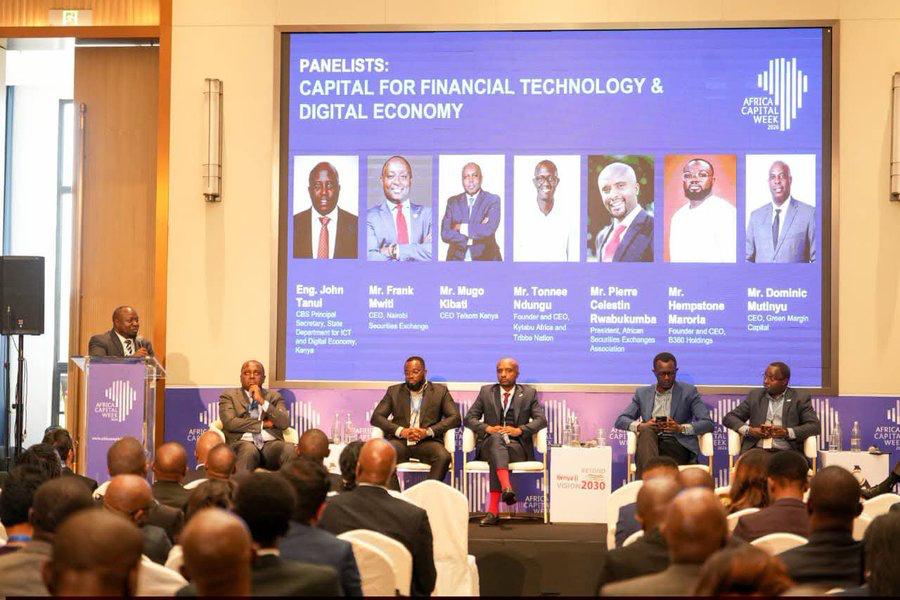
Based on reporting by Tukio, Africa Capital Week 2026 opened Monday with a session on financing fintech and the digital economy. John Kiria, representing Kenya’s ICT and Digital Economy office, said a trust gap between African investors and innovators is holding back homegrown growth; the discussion also covered mobile payments, digital infrastructure, regulation and interoperability.
The panel included Pierre Celestin Rwabukumba of the African Securities Exchanges Association, Frank Mwiti of the Nairobi Securities Exchange, Hempstone Maroria of B360 Holdings, Dominic Mutinyu of Green Margin Capital, and Tonnee Ndungu of Kytabu Africa and Tribbe Nation. No funding commitments, new investment vehicle, policy decision or implementation timetable was announced.
Why This Matters
A room full of fintech people discussing capital is not, by itself, a funding round. But the reported trust gap is the useful part of this story: it names the bottleneck between a plausible product and money that can help it reach customers.
That changes the practical question. The opportunity is not simply to build another payments feature. It is to build something local capital can understand, assess and support, while making interoperability and regulatory fit part of the product plan rather than a future headache. If those pieces move together, cross-market services become more possible. If they do not, an attractive demo can remain stuck behind borders, approvals and infrastructure gaps.
Our outlook (informed speculation): progress is likely to be gradual over the next 6–12 months, because the event put the right constraints on the table but did not announce a binding mechanism to remove them.
How the effects could spread
The first link is investor-founder contact. If it narrows the reported confidence gap, local fintech firms could get clearer access to capital conversations.
The second link is where users feel it. If financed companies put that money into interoperable products or digital infrastructure, services could operate more consistently across markets. That depends on investors actually committing capital, firms choosing cross-market capability, and regulators and infrastructure providers allowing compatible systems to operate. Fragmented rules or weak infrastructure could break the chain at any point.
Impact assessment
African fintech founders may gain better access to local-capital conversations in the coming weeks, but their bargaining position will not materially improve unless conversations turn into disclosed financing.
Investors may see a wider set of locally built opportunities through engagement with technology and capital-market participants. The same reported trust gap, however, can keep them cautious and slow to deploy.
Cross-border digital-finance users are more exposed to the longer-term outcome. Over 6–12 months, interoperable services could widen access across markets; absent implementation, daily options may look much the same.
Scenarios
Most likely
If the event produces continued investor-founder engagement but no new financing vehicles, regulatory commitments or technical deployments, practical discussions of trust and interoperability will continue over the next 6–12 months while cross-market access changes only gradually. This is the baseline because the report identifies barriers but announces no operational action. It would be strengthened by follow-on forums without disclosed commitments, and weakened by a named local-fintech fund, investment commitment or multi-market rollout.
Upside
If local capital providers commit funding and backed firms invest in interoperable products or digital infrastructure, some fintech services could expand beyond a single market within 6–12 months. That would give users more workable cross-border options and make compatible infrastructure a competitive advantage. Disclosed investments, live multi-market launches and enabling regulatory frameworks would support this path.
Downside
If the trust gap persists and regulators and infrastructure providers do not turn discussion into implementation, locally developed fintech firms could remain dependent on limited funding conversations and keep products confined to individual markets. Cross-border users would see little change in access. This path would be reinforced by repeated calls for trust without investment activity or operational interoperability progress.
What to watch next
- Named financing commitments, investment vehicles or completed investments tied to the digital-economy agenda.
- A concrete interoperability agreement, regulatory framework or technical deployment spanning more than one market.
- Fintech companies disclosing funding or partnerships involving local investors.
Comments
No comments yet.