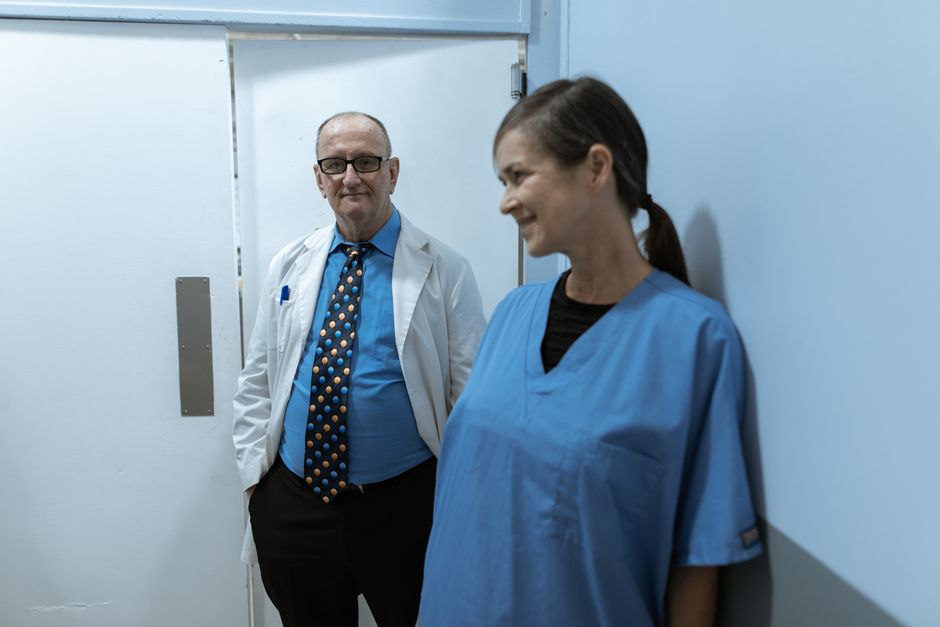
A hospital security lead facing a Medusa alert at 7:03 AM should make three decisions immediately: set the containment boundary, protect essential patient care, and preserve evidence while establishing trusted communications. A full incident briefing can follow, but these choices determine whether the hospital limits the damage or gives the intrusion more time to spread.
In April 1970, Apollo 13 was losing oxygen after an onboard explosion. The crew was still in space, the spacecraft was damaged, and Mission Control in Houston had to act before anyone possessed a complete account of the failure.
Flight director Gene Kranz and his teams worked from incomplete telemetry while protecting the one outcome that mattered: bringing Jim Lovell, Jack Swigert and Fred Haise home. NASA’s account and Lovell and Jeffrey Kluger’s book Lost Moon document how engineers isolated failing systems, preserved scarce power and built procedures around the equipment that remained usable.
A ransomware alert in a hospital carries different stakes and mechanics, but the decision pattern is relevant. You establish what must survive, contain what may be compromised, and keep learning without allowing the investigation to obstruct the mission.
Decision one: draw the first containment boundary
At 7:03 AM, patient care is already moving. Staff need records, diagnostic systems, communications and access to physical spaces. The security lead cannot treat every disconnected machine as harmless, yet cutting everything at once may create fresh clinical risks.
The first decision concerns scope: which accounts, endpoints, network segments or remote connections should be isolated now?
Start with observed evidence. A confirmed encryption event, malicious process, suspicious administrative login and unverified alert deserve different responses. Record what triggered the action, which systems appear involved and why each containment step is proportionate.
Containment should follow rehearsed authority. The lead needs to know who can disable an account, isolate a device or restrict a network segment without waiting for a large meeting. If those permissions remain unclear at 7:03, the incident plan has already failed one of its most practical tests.
Medusa raises the cost of delay. Updated technical, detection and mitigation guidance followed the ransomware’s impact on more than 500 victims across critical-infrastructure sectors as of April 2026. That scale does not prove what happened inside one hospital, but it supports treating a credible alert as an active operational risk rather than a ticket to review later.
Decision two: identify the care functions that must continue
The second decision is about clinical continuity. Security teams need a short, explicit list of services that patient care depends on during the next hour, along with approved fallback procedures and the people authorized to activate them.
This list cannot be improvised from a network diagram alone. A server may look minor to an analyst while supporting a workflow clinicians use constantly. Conversely, a prominent business system may tolerate a temporary interruption.
The security lead should bring clinical operations into the decision loop immediately, using a communication channel that does not depend on systems under investigation. Ask concrete questions: What care is blocked? Which workflows have documented downtime procedures? What must stay available, even in a reduced mode? Who can confirm that a workaround is safe?
This is where Kranz’s Apollo 13 response maps most closely. Mission Control did not preserve every spacecraft capability. Teams protected the functions required for survival and return, then rationed limited resources around that goal. A hospital needs the same hierarchy, defined for its own environment and validated by clinical owners.
Decision three: preserve evidence and create a trusted briefing path
Fast containment can erase useful evidence. Waiting for perfect evidence can leave an attacker connected. The third decision balances those risks.
Preserve the alert details, relevant timestamps, available logs and the identity of each person making a material change. Keep a simple action record: what changed, when, by whom and for what reason. That record supports technical investigation, executive decisions and later reporting without relying on memory after a long shift.
Then set a briefing rhythm. Name one incident lead, one operational counterpart and one approved place for status updates. Mark facts as confirmed, suspected or unknown. Avoid forwarding screenshots and theories through unmanaged group chats, where stale information can quickly become accepted truth.
This evidence discipline matters beyond ransomware. The same principle appears when evaluating security claims from vendors: demonstrated controls deserve more weight than reassurance. Our practical checklist for separating safeguards from reassurance applies that standard before deployment, when the pressure is lower and the available choices are wider.
Prepare the 7:03 AM version of the plan
A useful incident plan must work before the conference bridge fills up. Test it with a short exercise: present a credible alert at shift change, with patient activity continuing and several facts unresolved.
Give the lead ten minutes to name the first containment boundary, the care functions requiring protection and the evidence plus communication path. Observe where approval stalls, contact details fail or technical ownership becomes disputed. Those gaps are the work.
Apollo 13 returned safely because Mission Control converted incomplete information into controlled decisions, then revised those decisions as evidence improved. Hospitals should practice that sequence before a Medusa alert appears: protect the mission, limit exposure, preserve what investigators need, and make the next decision from a cleaner set of facts.
Comments
No comments yet.