What changed
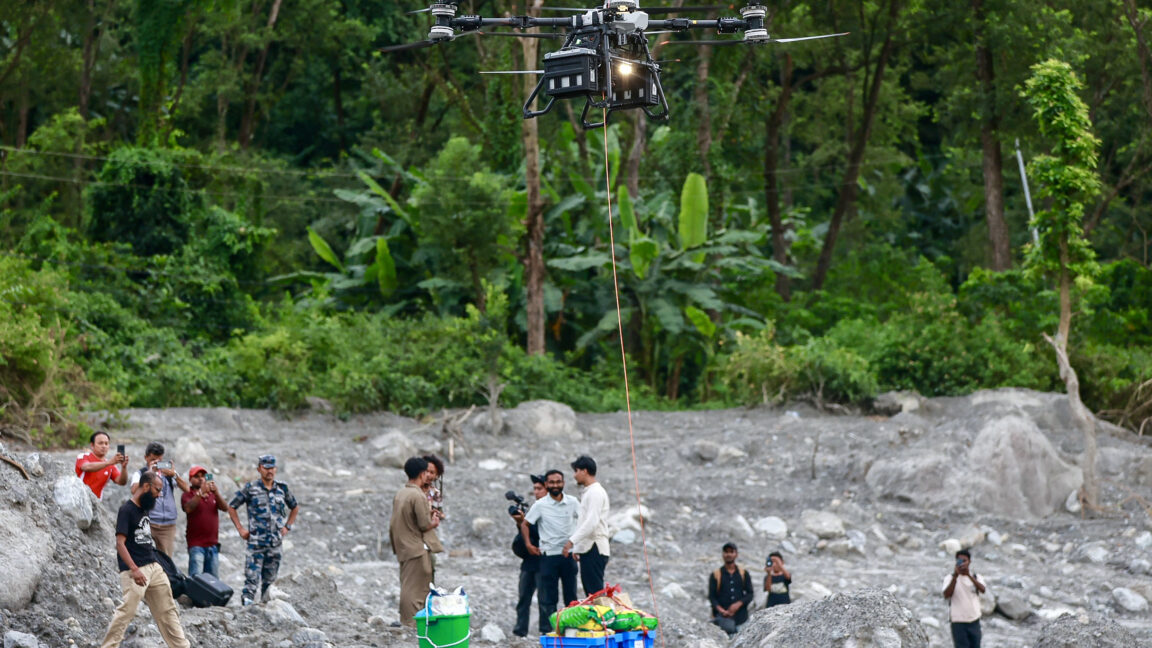
Nepal’s army is using four China-donated DJI FlyCart 100 drones for relief after a partial Himalayan glacier collapse triggered catastrophic flooding on August 26. The drones are making 10 to 16 deliveries a day, carrying about 132 pounds per trip, distributing 1,591 kilograms of food across 31 flights and recovering bodies from areas difficult to reach by ground, according to Ars Technica.
The FlyCart 100 uses a 98-foot rope and winch and is rated to carry 187 to 220 pounds, depending on its battery configuration. Smaller drones have also searched muddy, twisting hydropower tunnels, using speakers to call to possible survivors or play music.
Why it matters
The drones provide access at specific points while roads, crossings and hydropower sites remain damaged. They can lower supplies or retrieve bodies without requiring vehicles or rescuers to reach every location first. Their usefulness still depends on trained crews, safe drop points, workable weather and ground teams able to distribute incoming aid.
This is a limited capability, not a substitute for the wider response. Nepal had reported 1,369 deaths and more than 5,000 missing people by September 9, while more than 21,000 police and soldiers had been deployed and 13,646 people had been rescued. The United Nations was seeking $20.5 million to assist 43,000 people, according to Ars Technica.
How the effects could spread
China’s donation gives the Nepal Army heavy-lift capacity that can move food and retrieve bodies across blocked or dangerous terrain. That can provide isolated communities with supplies before ground routes are restored, while smaller drones extend searches into tunnels that may be unsafe for larger rescue teams.
If the missions continue to prove useful, Nepal and aid partners may direct more resources toward aircraft, operators, maintenance and aerial-logistics procedures. That could improve access at selected sites, but the four-aircraft fleet cannot cover every affected area and remains dependent on weather, serviceability and ground distribution.
The operation may also strengthen the procurement case for DJI and other Chinese commercial-drone suppliers. Their equipment is being used both for Everest supply runs and flood relief, though any longer-term effect would depend on follow-on funding, training and local maintenance capacity.
Impact assessment
The Nepal Army gains an additional transport and recovery tool during an emergency involving blocked crossings, damaged infrastructure and difficult terrain.
Flood survivors outside accessible roads may receive food and contact sooner, but coverage will remain uneven because the fleet is small and each aircraft carries a limited payload.
Hydropower workers and operators gain another search method. Small drones can transmit audio through tunnels, but mud, bends and zigzags can prevent them from reaching trapped workers.
Nepal’s government and aid coordinators gain operational experience with drone-supported relief, while still needing conventional rescue forces, distribution networks and humanitarian funding to address the disaster’s wider scale.
Scenarios
Our outlook (informed speculation): the most likely outcome over the next days and weeks is targeted drone use alongside ground forces and conventional aid. If the four aircraft remain operational, crews are available and weather permits flights, Nepal will continue using them for selected food deliveries, body recovery missions and tunnel searches. The result will be improved access at particular locations, not a replacement for roads, helicopters or large rescue teams.
Upside: if Nepal or aid partners fund additional aircraft, training, maintenance and coordination, cargo and inspection drones could become part of longer-term disaster planning. That would expand aerial-logistics capacity beyond the current four-drone operation and improve Chinese suppliers’ position in regional emergency procurement.
Downside: unless the fleet can scale and aerial missions connect reliably with ground relief, operations may remain concentrated at a few sites. Difficult tunnels, severe weather and damaged infrastructure would continue to limit access, leaving survivors dependent mainly on ground teams and broader humanitarian funding.
What to watch next
- Whether Nepal reports food deliveries beyond the initial 31 flights.
- Whether Nepal or aid partners add aircraft, crews, training or maintenance support.
- Whether drone-assisted tunnel searches lead to further survivor locations or rescues.
- Whether disaster-response plans or budgets give cargo and inspection drones a permanent role.
Comments
No comments yet.